Agility’s new humanoid robot will stop, squat to avoid harming human coworkers
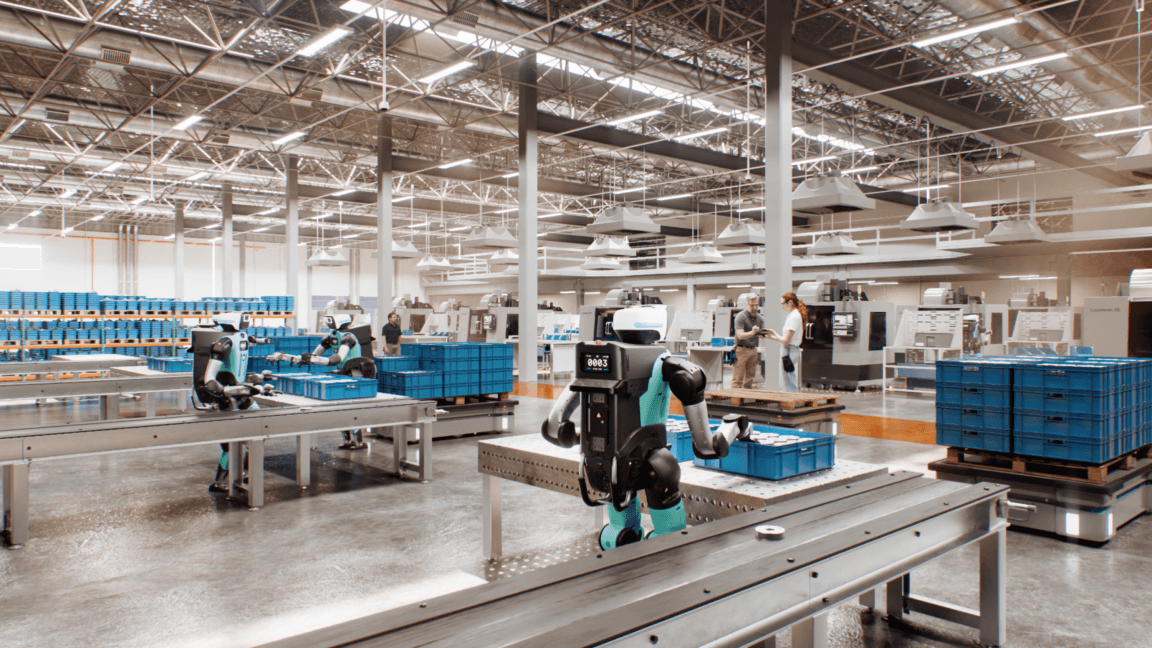
Agility Robotics unveiled Digit 5, a humanoid robot built to detect nearby people and adapt its motion to avoid harming human coworkers — including stopping, moving aside, or squatting into a seated posture when someone approaches. The company says the robot will be available for early access in the first half of 2027 and generally available by the end of that year, with production ramped at its RoboFab facility in Salem, Oregon.
Why It Matters
If Digit 5’s "cooperative safety" features prove reliable in commercial settings, warehouses and factories could deploy humanoid robots without isolated cages or fixed safety barriers, potentially expanding where and how these machines are used. Agility is also contributing to an ISO safety standard, which could shape industry rules for mobile industrial robots.
Key Facts
- robot name: Digit 5
- safety behaviors: can move to avoid people, stand still to let people pass, or squat into a seated position when someone gets close
- early access: first half of 2027
- general availability: by the end of 2027
- production facility: RoboFab in Salem, Oregon (being retooled)
Agility Robotics introduced Digit 5, a new humanoid robot designed to operate safely around human coworkers without relying on physical cages or fixed safety barriers. The machine is programmed to detect people at a distance and respond with graded mitigations — from moving aside or pausing to squatting into a seated posture when someone comes very close — rather than simply shutting down. Agility’s chief technology officer, Pras Velagapudi, described the system as a "complex safe motion" capability that selects different precautions based on the type of human presence detected.
Digit 5 combines onboard AI and a multimodal sensor suite that the company says includes several vision-based sensors to monitor nearby people. The robot runs on Nvidia’s Thor IGX hardware and integrates the Nvidia Halos for Robotics safety stack; Agility says it is among the first to apply Thor IGX in a functionally safe robotics application. The company also noted that its fleet management system can interface with customers’ existing workplace safety systems.
Agility is positioning the new model amid wider industry efforts to make humanoid robots practical in shared workspaces. The company is participating in an ISO working group developing the industrial mobile robot safety standard ISO 25785-1, which is currently under committee review and will later be voted on by the organization’s 89 voting members. Agility plans to offer customers early access to Digit 5 in the first half of 2027 and expects general availability by year-end, with production taking place at its retooled RoboFab plant in Salem, Oregon.
The design includes physical and operational upgrades over prior Digit versions. An updated leg system can repeatedly lift up to 50-pound loads, meeting the single-person lift tasks defined by OSHA, and the robot stands 5 ft. 11 in. with a reach up to 7.2 ft. Battery life is rated at 90 minutes per charge with a nine-minute recharge time, which Agility says enables the robot to be productive for more than 20 hours across a 24-hour period by minimizing downtime. Digit 5 also supports swappable grippers and new AI-based skills to handle a broader set of manipulation tasks beyond moving totes.
Agility has previously deployed earlier Digit models in commercial operations, including a full-time deployment at a GXO warehouse in Atlanta in 2024, and reports more than 65,000 hours of work across warehouses and factories in North America. Current pilot and deployment customers include GXO, Schaeffler, Amazon, and Toyota Motor Manufacturing Canada. Company leaders argue that the cooperative safety features on Digit 5 could allow robots to stack and package goods, pause for human pallet swaps, and move through aisles where people also work — scenarios where fixed safety cages would be impractical.
Keep Reading

AI agents now have a place to snitch

SpaceX will try to put Starship in orbit for the first time on September 22

The AI graveyard: a running list of projects and startups that didn’t make it
