Founder’s cost-cutting obsession drove Unitree lead in cheap humanoid robots
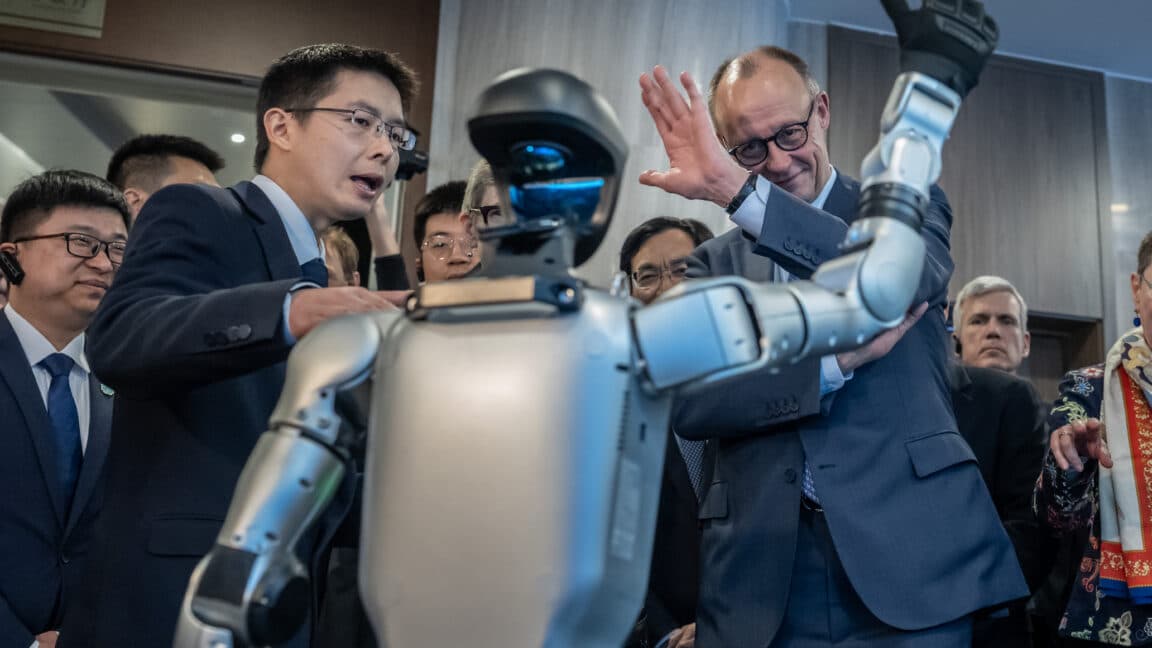
Unitree founder Wang Xingxing has tightly controlled both technical direction and company spending as the firm pursues more autonomous humanoid robots, according to recent reporting. Caijing Magazine and other outlets describe a hands-on leadership style that includes late-night oversight, strict expense approvals and a penalty-focused performance system during a period of rapid staff growth.
Why It Matters
Leadership practices shape how quickly and sustainably a hardware-focused robotics startup can scale; the reporting raises questions about whether an intensely centralized, cost-focused management approach will work as Unitree expands. These issues are relevant while the company pursues larger AI-driven autonomy and navigates an IPO.
Key Facts
- Founder: Wang Xingxing
- Founder background: Hardware structural engineering
- Comments on AI strategy: During Unitree's recent IPO Wang discussed using large AI models as a basis for physical AI aiming at a self-improving autonomy loop (reported by Caijing Magazine)
- Skepticism about world models: Wang has expressed that large world models can be too compute-intensive (reported by Caijing Magazine)
- Workday habits: Reportedly posts to work chats at 2–3 a.m. and spends most of his time in the office, including weekends (reported by Caijing Magazine)
Employees and Chinese reporting portray Unitree founder Wang Xingxing as a founder who combines technical direction with tight operational control. Wang, who trained in hardware structural engineering, has voiced reservations about some large-scale AI world models as too costly to run, yet during Unitree’s recent IPO he also described plans to build physical AI around large models to create a continuous loop of perception, decision-making, action and learning, according to Caijing Magazine.
Sources quoted by Caijing depict an intensely hands-on management style. Staff say Wang regularly posts late at night, keeps long hours at the office — including weekends — and communicates in a terse, business-focused manner. The company reportedly lacks a formal management hierarchy, leaving many decisions to be escalated to the founder himself.
That cost-control orientation extends to routine administrative matters: employees told Caijing that Wang personally signs off on expense reimbursements above 100 yuan (about $15). The same reporting and employee accounts describe a rewards system dominated by penalties rather than positive incentives; staff compare who receives less criticism, and Wang is said to have assigned every senior executive the same performance score of 1 on a 0-to-1.5 scale.
The personnel effects have been notable: a longtime employee told Caijing the firm has experienced its highest attrition among core staff in 2025 and 2026. Unitree has also grown quickly — Rest of World reported the company had at least 480 employees this year. Caijing initially received no response from Unitree; the company later issued a broad statement to other Chinese media calling Caijing’s reporting substantially “misinformation” but did not provide specifics.
Keep Reading
Why are AI’s biggest companies suddenly asking to slow down?
