Tesla workers balk at training Optimus humanoid robots as replacements
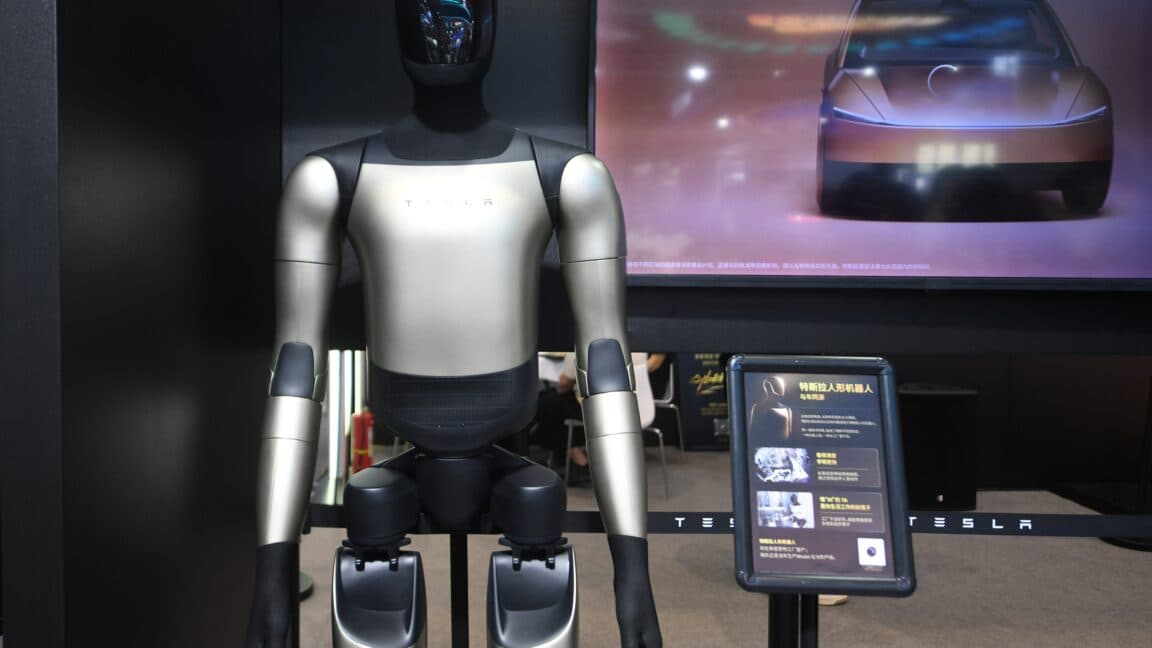
Tesla’s effort to train its Optimus humanoid robots has been hampered by imperfect manufacturing, unreliable touch sensors and limited AI capabilities, prompting the company to move data-collection work away from regular factory staff. The firm still targets producing 1,000 Optimus robots per week by the end of 2026, even as it faces supply-chain reliance on Chinese suppliers and growing competition from global automakers and robotics firms.
Why It Matters
If Tesla succeeds in scaling humanoid production it could reshape factory labor and the robotics supply chain, but current technical and training hurdles — plus regulatory and competitive pressures — mean widespread, cost-effective deployment is far from assured.
Key Facts
- Tesla production target: 1,000 Optimus robots per week by end of 2026
- Sensor issue: Touch sensors in robot hands proved unreliable, prompting a replaceable glove-like sensor layer
- AI capability: Robots require programming for specific tasks in controlled environments rather than general-purpose operation
- Worker training data: Tesla initially had factory workers wear motion-recording suits to capture manual-task data
- Shift in data collection: Tesla reassigned data collection to dedicated teams and created "training hubs" after worker complaints that robots would replace them},{
Tesla’s Optimus development program has encountered multiple practical hurdles as the company pushes toward mass production. Newly manufactured units have required on-the-spot fixes because of a manufacturing process described as imperfect and manually intensive. Engineers responded to fragile hand touch sensors by designing a glove-like, replaceable sensor layer to avoid swapping entire hands when a sensor fails.
The robots’ onboard AI remains limited, according to reporting, with Optimus units currently needing explicit programming for narrowly defined tasks in controlled settings rather than performing general-purpose work. A central bottleneck for Tesla and other robotics firms is obtaining enough diverse training data to teach machines to visually and physically mimic a wide range of manual tasks.
Tesla had initially collected movement data by equipping factory workers in Texas and California with special suits that recorded their motions during work. Some employees objected, saying they believed the data collection was intended to train machines that would displace them. In response, Tesla moved the responsibility to dedicated teams and established training hubs to continue capturing human demonstrations without relying on regular production staff.
Beyond technical and workforce challenges, Tesla depends on components from Chinese suppliers for various parts of Optimus, a reliance that persists despite U.S. policy efforts to onshore robotics production. The industry also faces regulatory scrutiny: in July, the Federal Communications Commission barred certain new foreign-made robots including humanoid robots, four-legged robot dogs and robot vacuum cleaners. Meanwhile, incumbents and startups globally are advancing their own humanoid programs — automakers and robotics companies in China, Japan and South Korea, Toyota’s multi-billion-dollar factory robotics plans, Hyundai’s intent to deploy up to 25,000 Atlas robots from Boston Dynamics, and deployments such as Agility Robotics’ units working at a GXO Logistics warehouse in Atlanta in 2024 — underscoring the competitive and commercial challenges Tesla confronts as it seeks large-scale humanoid deployment.
Keep Reading

Anthropic to pay Akamai $11.6 billion over seven years in cloud deal

The hottest new hangout for middle schoolers is NPR’s comment section?

Meta opens early access program for new Muse features
