The complex corporate web behind a $3.2 billion AI data center
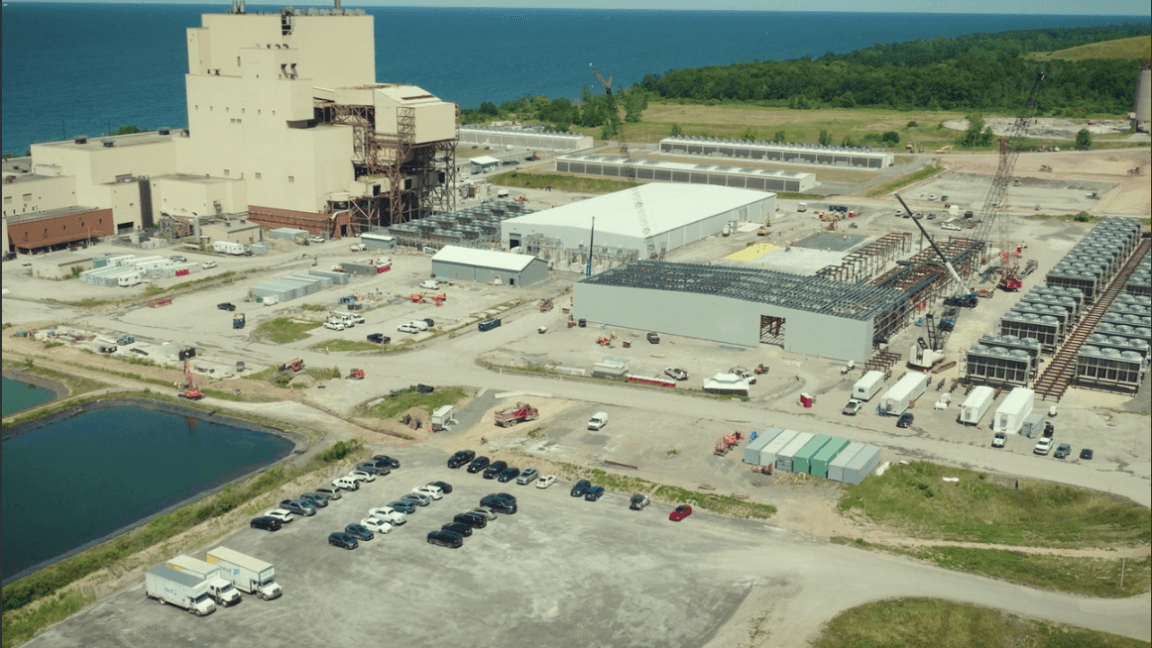
A $3.2 billion AI data center project in New York has exposed governance challenges when multiple companies share responsibility for a major infrastructure development. The Lake Mariner facility, which experienced a fire in June with inadequate safety systems, involves TeraWulf as operator, Google as a warrant holder, Fluidstack as management partner, and Anthropic as a primary user, creating unclear lines of accountability for safety, employment, and community impact.
Why It Matters
As AI infrastructure buildouts accelerate across the country, the Lake Mariner case demonstrates how fragmented ownership structures can obscure responsibility for safety failures, unmet job promises, and socialized costs to local communities. The incident raises broader questions about regulatory oversight when corporate arrangements distribute accountability across multiple stakeholders.
Key Facts
- Project value: $3.2 billion
- Location: Lake Mariner data center in Somerset, New York on former coal mine
- Original job promise (2019): 165 permanent jobs
- Current employment projection (2024): 35 to 40 permanent jobs
- Power capacity: Up to 500 megawatts
The Lake Mariner data center in Somerset, New York illustrates the challenges regulators and communities face when infrastructure projects involve multiple corporations with different roles and incentives. A fire in June at the still-under-construction facility revealed that firefighters encountered non-functional alarms, no suppression systems, and broken hydrants—creating dangerous conditions for emergency responders who lacked access to proper safety documentation. The incident highlighted the murky accountability structure surrounding the massive AI buildout.
Ownership and operational control of the site are distributed across several entities. TeraWulf owns and operates the data center on land leased from a company controlled by TeraWulf's own CEO. Fluidstack, a UK-based firm, manages operations. Google holds warrants for future equity stakes and guarantees lease payments. Anthropic represents one of several AI companies that will use the facility's computing resources. This arrangement raises questions about who bears ultimate responsibility when problems arise. TeraWulf eventually claimed operational safety responsibility but implementation remains incomplete—company officials reported installing additional safety measures after the fire, yet local fire chief Steve Matisz indicated in August that critical infrastructure like hydrants remained non-functional.
The project has also failed to meet employment commitments promised to justify special economic benefits from the state. When Somerset operating officials initially sought the power discount in 2019, they projected 165 permanent jobs and $85 million in capital investment. A 2024 planning presentation revealed the full buildout would deliver only 35 to 40 permanent positions—a dramatic shortfall that raises questions about the return on public benefits extended to the project. TeraWulf's leadership has not responded to inquiries about this discrepancy, and the company's communications team has reportedly avoided community meetings with local officials.
Beyond employment and safety concerns, the concentrated power demand creates costs that extend beyond the companies involved. Data centers drawing continuous high-volume electricity increase system-wide expenses for grid management and backup power generation, costs that get distributed across all consumer electricity bills regardless of whether those consumers benefit from the facility. While Anthropic committed in February 2026 to cover electricity price increases attributable to its data centers, the pledge covers only pricing impacts and remains silent on other promised community benefits like noise management and renewable energy commitments.
Keep Reading

Tracking cocoa may be just the beginning for PwC, Merck, Hashgraph provenance system

Xiaomi’s wide foldable promises more power than Samsung’s

First Xiaomi, then the world: why Arm might give phone gaming a huge graphics boost
