I spent $4,000 on a robot dog from China
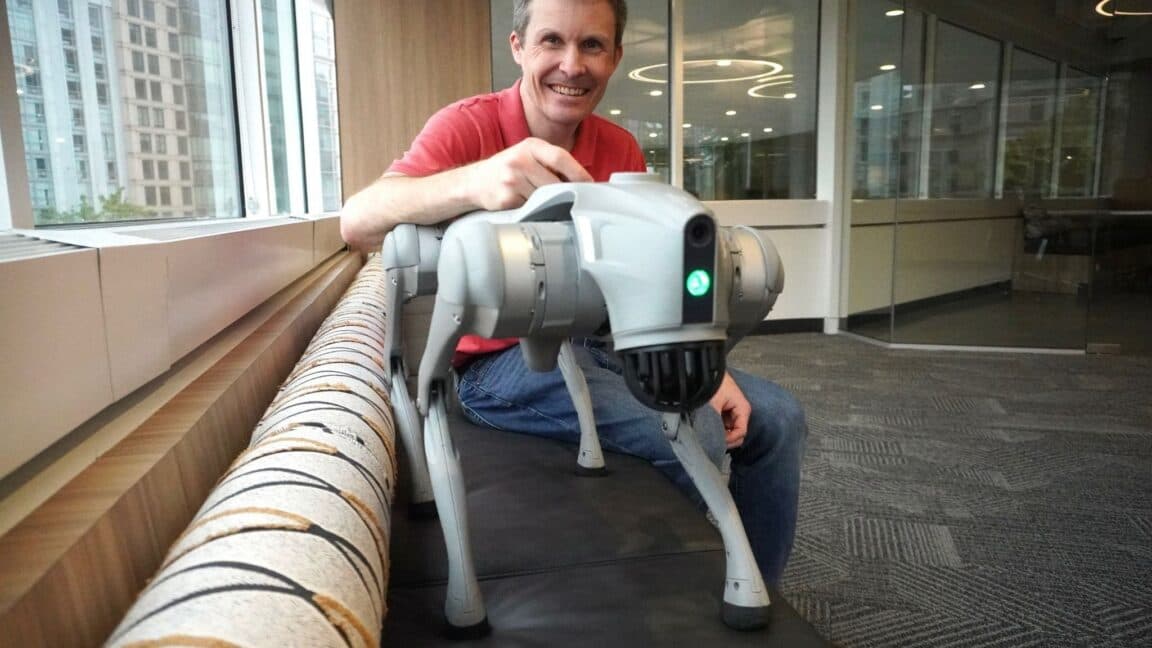
A technology writer bought a Unitree Go2 Pro robot dog for $4,017 and tested it on daily walks in Washington, DC, where it attracted public attention but struggled with battery and overheating on uphill returns. Unitree’s low prices have broadly expanded access to quadruped robots for research and hobbyists, and the company has rapidly scaled into humanoid robots and public markets.
Why It Matters
Unitree’s affordability has made advanced quadruped platforms widely available to universities and individuals, shifting who can experiment with legged robots; the company’s move into humanoids and a high-profile IPO signal broader commercial momentum that could reshape robotics development and deployment. The author also notes Unitree faces legal restrictions in the United States, which may affect adoption.
Key Facts
- Purchase price: $4,017
- Robot model: Unitree Go2 Pro
- Commute distance: Two miles each way to the office
- Afternoon temperature: 87°F (30°C)
- Battery at collapse: 5 percent indicated on phone display when robot collapsed near home
The author took a Unitree Go2 Pro quadruped on the morning commute and drew steady attention from passersby, who photographed the machine and asked about its purpose. Biological dogs often kept their distance, while children were delighted by simple programmed tricks such as "shake" and small jumps.
The robot completed a mostly downhill walk to the office and was recharged there, but it had difficulty on the return trip as the route turned uphill and the temperature rose to about 87°F (30°C). Near home the phone showed the internal temperature at 84°C (183°F) and the battery level at roughly 5 percent; a short distance from the front door the machine collapsed, ending up on its back with its face light blinking red and its lidar still spinning.
Practically speaking, the author found limited day-to-day utility for the device: quadrupeds are common in lab research and sometimes used for entertainment, but wheeled robots and drones are often more efficient for deliveries and inspections, and the lack of manipulators limits household tasks. The compelling factor for the author was price — $4,017 — vastly lower than comparable platforms a few years ago, making the technology affordable enough that new or unexpected uses might emerge.
Researchers and industry observers say Unitree’s lower costs have reshaped the field. George Mason University roboticist Xuesu Xiao told the author that Unitree helped democratize quadruped locomotion research; his lab uses multiple Unitree units that cost around $15,000 each, whereas earlier name-brand models such as Boston Dynamics’ Spot start near $75,000. Unitree has since expanded into humanoid robots (first released in 2023) with models priced as low as about $13,500, and the company went public on the Shanghai exchange on August 19 — its shares jumped more than fivefold on debut and at a recent close the firm was valued near $34 billion, roughly triple its pre-IPO valuation.
Keep Reading

OpenAI just wants to win

Where to preorder the iPhone 18 Pro and Pro Max

Laika’s stop-motion fantasy Wildwood looks so smooth

Mecka AI nears $500M valuation in Sequoia-led deal amid rush for robot training data
Original source: Ars Technica AI