This AI Is Already Fooling People on Video Calls Into Thinking It's Human, Company Says
AI startup Tavus says its new conversational video model, Griffin-Lite, convinced 26 of 54 people (48%) in one-minute live video calls that they were speaking to a real human. The company reports Griffin-Lite tops NVIDIA's VideoFDB generation benchmark and is being tested only by select trusted users while Tavus develops safety safeguards.
Why It Matters
If the results hold up beyond Tavus' internal research, a model that can routinely pass for a human on short live video calls raises fresh questions for authentication, fraud prevention and content trust, especially given prior cases of deepfake-enabled scams on video conferencing platforms.
Key Facts
- Company: Tavus
- Model tested: Griffin-Lite (part of Griffin family)
- Test outcome (human belief): 26 of 54 participants (48%) said they believed the partner was a real person after a one-minute call
- Previous system result: 1 of 41 participants (2.4%) believed the partner was human
- NVIDIA VideoFDB generation score: Griffin-Lite 3.83 of 5 (next-best 2.80; human reference 3.92)
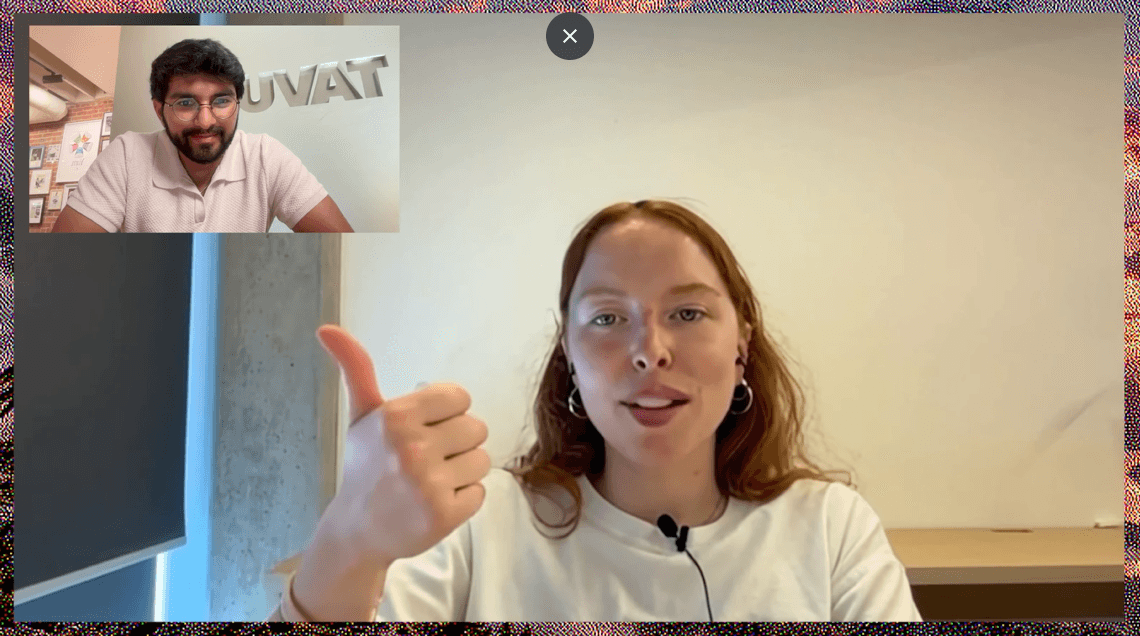
Tavus on October 1 unveiled Griffin, a so-called Human Interaction Model designed to understand and generate face-to-face conversation, and published results for a research preview variant called Griffin-Lite. In the company's own tests, Griffin-Lite spoke with 54 people for one-minute video calls about a prompt and afterward 26 participants reported they thought their partner was a real person. By contrast, Tavus says its prior system convinced only one of 41 participants. Participants were told they would be matched with another person for a short video conversation and were not informed that a bot might be on the other end; only after the call were they asked whether it had crossed their mind that their partner might not be real. Tavus notes that participants who did grow suspicious usually did so within about 20 seconds. The company recruited people through what it describes as an independent research platform and published the results on its research page. Tavus also reports strong benchmark performance on NVIDIA’s VideoFDB, a test of live audio and video conversation. On VideoFDB’s generation track, Griffin-Lite scored 3.83 out of 5, ahead of the next-best system at 2.80 and close to the human reference at 3.92. On the perception track, which measures understanding of audio/visual inputs, Griffin-Lite scored 3.73 versus a human reference of 4.20; Tavus says NVIDIA ran those evaluations independently. Griffin is full-duplex — it listens and speaks simultaneously — and in demos the system follows visual cues and pauses naturally. Tavus says Griffin-Lite is currently available only to select trusted testers while the company works on disclosure features and safety measures; it is not yet open to retail customers. The company reiterated that it is developing protections before broader release, citing safety concerns given prior incidents where deepfakes and manipulated video were used in fraud and intrusion campaigns.
Keep Reading

Apple will limit Mac disk access as AI agents ‘substantially’ increase risk

Netflix is pivoting away from prestige

Call it AI, call it Super Intelligence, only 2% of consumers are buying it