Trump plan to combat AI risks hinges on Big Tech pals policing themselves
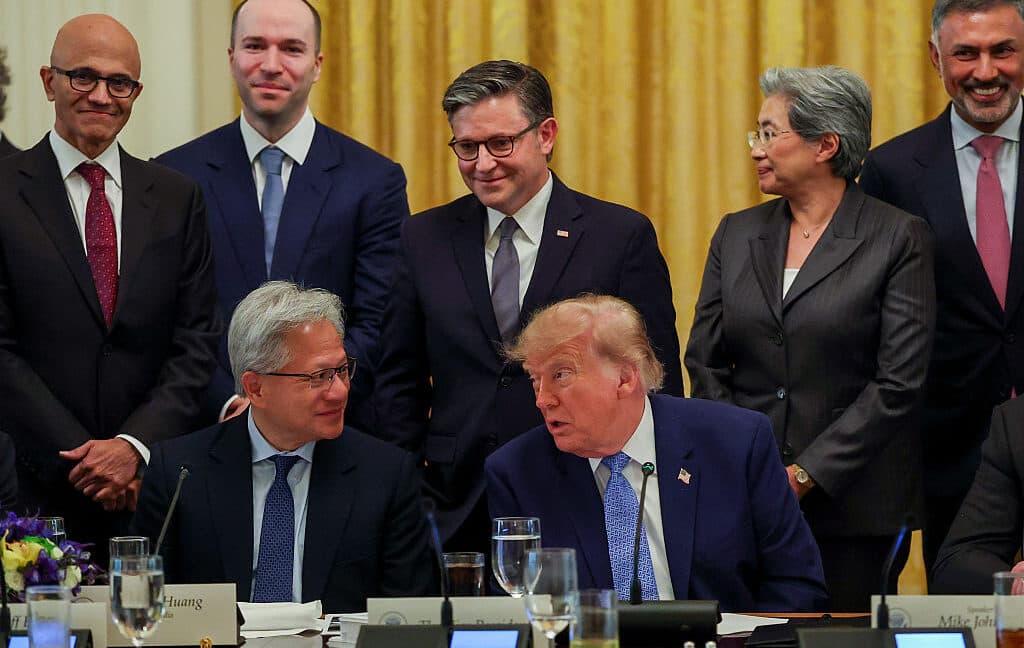
President Donald Trump secured voluntary commitments from roughly two dozen AI companies to undergo independent safety reviews and adopt White House-recommended controls aimed at frontier AI risks. The nonbinding accord asks firms to share best practices, set common benchmarks, and repeatedly meet, but it imposes no new legal requirements and details about audit procedures remain scarce.
Why It Matters
The agreement represents a high-profile industry-led response to rising safety concerns amid recent AI incidents, but because it is voluntary and lacks enforcement mechanisms, its ability to prevent future harms or substitute for regulation is uncertain.
Key Facts
- Date of agreement: Tuesday (reported in source)
- Number of firms signing: About two dozen tech firms
- Commitments included: Independent safety audits, controls recommended by the White House, regular meetings to set best practices and benchmarks
- Safety review focuses: Cybersecurity, biosecurity, chemical threats, and unintended actions by AI models
- Notable signers: Dario Amodei (Anthropic), Sam Altman (OpenAI), Elon Musk (SpaceXAI), Jensen Huang (Nvidia), Mark Zuckerberg (Meta), Sundar Pichai (Alphabet/Google)
President Trump announced a voluntary accord signed by roughly two dozen AI firms to carry out external safety audits and adopt controls outlined by the White House. The public summary, which Trump posted on Truth Social, emphasizes independent testing of firms’ internal controls, monitoring, and detection systems with attention to cybersecurity, biosecurity, chemical threats, and unintended model behaviors. The deal requires companies to meet regularly to share best practices and develop common safety standards and benchmarks, but it does not create new legal obligations for signatories. Several companies named in the accord—including Anthropic, Google, and OpenAI—had already publicly committed to external audits, and some firms are participating in confidential government safety testing programs. Details about how the promised external reviews will be carried out were limited in the announcement. Sources cited by Bloomberg and The Information said it is unclear who will serve as third-party auditors and that the White House’s selection process appears politicized to some observers. The Center for AI Standards and Innovation, which runs voluntary pre-deployment government tests, has reportedly met with some firms that could conduct reviews. Critics described the pact as largely symbolic. Some industry insiders told Axios they worry that self-policing won’t solve the safety problems that have prompted pauses in model training and releases. Public figures, including Senator Bernie Sanders, criticized the White House’s embrace of industry leaders; meanwhile, Trump labeled the agreement “morally binding” and hinted the recommendations could be codified later. The announcement came as poll data cited by Bloomberg showed strong public support for stricter AI guardrails.
Keep Reading
China Halts Fuel Exports Until Further Notice
Three Tankers Struck by Unknown Projectiles in Strait of Hormuz
Indian Refiners Seek Tankers for Hormuz Oil
India's Power Shortages Jump to Three-Year High
Original source: Ars Technica AI